
Xem trước nội dung
T H O I V I S O I M ------------ * -------------
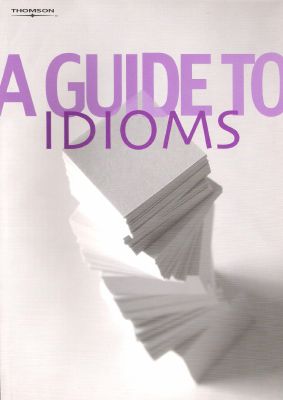
AGuide to Idioms
Editors Kay Cullen, Panny Hands, Una M cG overn and John Wright
Published by arrangement with Chambers Harrap Publishers Ltd.
Copyright © Chambers Harrap Publishers Ltd 2000.
Publisher/Global ELT: Christopher Wenger Executive Marketing Manager, Global ELT/ESL: Amy Mab/ey
Printed in Croatia by Zrinski d.d 1 2 3 4 5 6 7 8 9 10' 06 05 04 03 02 01
Heinle, Thomson and the Thomson logo are trademarks used herein under license.
For more information contact Heinle, 25 Thomson Place, Boston, M A 02210 USA, or you can visit our Internet site at http: / /www.heinle.com
A ll rights reserved. No part o f this work covered by the copyright hereon may be reproduced or used in any form or by any means-graphic, electronic, or mechanical, including photocopying, recording, taping,Web distribution or information storage and retrieval systems-without the written permission of the publisher.
A CIPcatalogue record for this book is available from the British Library.
We have made every effort to mark as such all words which we believe to be trademarks. We should also like to make it clear that the presence o f a word in this book, whether marked or unmarked, in no way affects its legal status as a trademark.
13 digit ISBN: 978 1 84480 525 9 10 digit ISBN: 1 84480 525 5
The publishers would like to thank Imogen Preston for her contribution to this project.
Typeset by Chambers Harrap Publishers Ltd
Introduction
What is an idiom?
The term ‘idiom’ is not an easily defined one - it can refer to many kinds of words and phrases. The traditional definition of an idiom is ‘a group of words which has a different meanư ing from the sum of its parts’. For example, you can make someone’s blood boil or say they are a sight for sore eyes. Knowing the meanings of all the words in such a phrase will not necessarily help you to understand the meaning of the whole phrase.
This guide is designed to help anyone who wants to know about idioms, including not only what they mean, but also how to use them. It provides an introduction to the most comư monly used idioms in British and American English. Each idiom has its own entry with a full-sentence definition. These not only define the idiom but also show it in grammatư ical context. Further usage information is given in the exư amples, which have all been based on a corpus. Idioms are clearly labelled to show whether they are common in British or American English and which register or level of language the idiom belongs to. When the idiom has any synonyms or near-synonyms these are also shown.
To make this guide as easy to use as possible, idioms are listed according to a strict ordering system. Under this sysư tem, any idiom that you are looking for which contains a noun will be found under the first noun that occurs within it. So make someone’s blood boil will be found under blood. If there is no noun in the idiom, look for the first verb. For example not much to look at will be found under look. If there is no noun or verb in the idiom that you are looking for, it will be found at the first adjective. An example of this kind of idiom would be alive and kicking, which will be found under alive. If there is no noun, verb, or adjective, look for the first adverb. So anywhere from, will be found under anywhere.
m
Trên đây là phần đầu tài liệu — bấm Đọc sách để xem đầy đủ.