
Xem trước nội dung
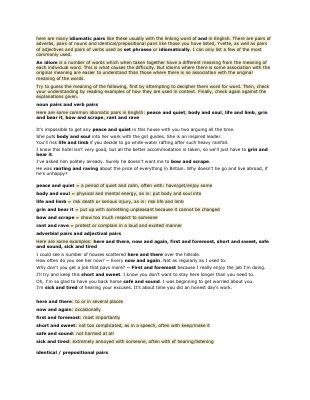
here are many idiomatic pairs like these usually with the linking word of and in English. There are pairs of adverbs, pairs of nouns and identical/prepositional pairs like those you have listed, Yvette, as well as pairs of adjectives and pairs of verbs used as set phrases or idiomatically. I can only list a few of the most commonly used. An idiom is a number of words which when taken together have a different meaning from the meaning of each individual word. This is what causes the difficulty. But idioms where there is some association with the original meaning are easier to understand than those where there is no association with the original meaning of the words. Try to guess the meaning of the following, first by attempting to decipher them word for word. Then, check your understanding by reading examples of how they are used in context. Finally, check again against the explanations given. noun pairs and verb pairs Here are some common idiomatic pairs in English: peace and quiet, body and soul, life and limb, grin and bear it, bow and scrape, rant and rave It's impossible to get any peace and quiet in this house with you two arguing all the time.
She puts body and soul into her work with the girl guides. She is an inspired leader.
You'll risk life and limb if you decide to go white-water rafting after such heavy rainfall.
I know this hotel isn't very good, but all the better accommodation is taken, so we'll just have to grin and bear it.
I've asked him politely already. Surely he doesn't want me to bow and scrape.
He was ranting and raving about the price of everything in Britain. Why doesn't he go and live abroad, if he's unhappy? peace and quiet = a period of quiet and calm, often with: have/get/enjoy some body and soul = physical and mental energy, as in: put body and soul into life and limb = risk death or serious injury, as in: risk life and limb grin and bear it = put up with something unpleasant because it cannot be changed bow and scrape = show too much respect to someone rant and rave = protest or complain in a loud and excited manner adverbial pairs and adjectival pairs Here are some examples: here and there, now and again, first and foremost, short and sweet, safe and sound, sick and tired I could see a number of houses scattered here and there over the hillside.
How often do you see her now? ~ Every now and again. Not as regularly as I used to.
Why don't you get a job that pays more? ~ First and foremost because I really enjoy the job I'm doing.
I'll try and keep this short and sweet. I know you don't want to stay here longer than you need to.
Oh, I'm so glad to have you back home safe and sound. I was beginning to get worried about you.
I'm sick and tired of hearing your excuses. It's about time you did an honest day's work.
here and there: to or in several places now and again: occasionally first and foremost: most importantly short and sweet: not too complicated, as in a speech, often with keep/make it safe and sound: not harmed at all sick and tired: extremely annoyed with someone, often with of hearing/listening identical / prepositional pairs
Trên đây là phần đầu tài liệu — bấm Đọc sách để xem đầy đủ.