
BỒI DƯỠNG ĐỘI TUYỂN HSG THPT NĂM 2022 TIẾNG ANH - ASSORTED TEST FOR NEC 6 Mã A424021
Báo tài liệu không phù hợp
Xem trước nội dung
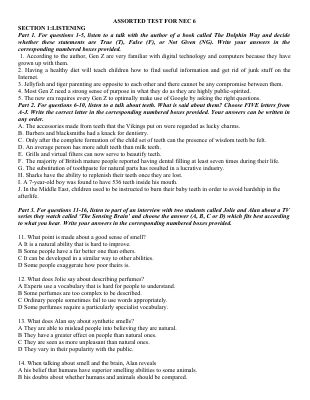
ASSORTED TEST FOR NEC 6 SECTION 1:LISTENING Part 1. For questions 1-5, listen to a talk with the author of a book called The Dolphin Way and decide whether these statements are True (T), False (F), or Not Given (NG). Write your answers in the corresponding numbered boxes provided. 1. According to the author, Gen Z are very familiar with digital technology and computers because they have grown up with them. 2. Having a healthy diet will teach children how to find useful information and get rid of junk stuff on the Internet. 3. Jellyfish and tiger parenting are opposite to each other and there cannot be any compromise between them. 4. Most Gen Z need a strong sense of purpose in what they do as they are highly public-spirited. 5. The new era requires every Gen Z to optimally make use of Google by asking the right questions. Part 2. For questions 6-10, listen to a talk about teeth. What is said about them? Choose FIVE letters from A-J. Write the correct letter in the corresponding numbered boxes provided. Your answers can be written in any order. A. The accessories made from teeth that the Vikings put on were regarded as lucky charms. B. Barbers and blacksmiths had a knack for dentistry. C. Only after the complete formation of the child set of teeth can the presence of wisdom teeth be felt. D. An average person has more adult teeth than milk teeth. E. Grills and virtual filters can now serve to beautify teeth. F. The majority of British mature people reported having dental filling at least seven times during their life. G. The substitution of toothpaste for natural parts has resulted in a lucrative industry. H. Sharks have the ability to replenish their teeth once they are lost. I. A 7-year-old boy was found to have 536 teeth inside his mouth. J. In the Middle East, children used to be instructed to burn their baby teeth in order to avoid hardship in the afterlife.
Part 3. For questions 11-16, listen to part of an interview with two students called Jolie and Alan about a TV series they watch called ‘The Sensing Brain’ and choose the answer (A, B, C or D) which fits best according to what you hear. Write your answers in the corresponding numbered boxes provided.
11. What point is made about a good sense of smell? A It is a natural ability that is hard to improve. B Some people have a far better one than others. C It can be developed in a similar way to other abilities. D Some people exaggerate how poor theirs is.
12. What does Jolie say about describing perfumes? A Experts use a vocabulary that is hard for people to understand. B Some perfumes are too complex to be described. C Ordinary people sometimes fail to use words appropriately. D Some perfumes require a particularly specialist vocabulary.
13. What does Alan say about synthetic smells? A They are able to mislead people into believing they are natural. B They have a greater effect on people than natural ones. C They are seen as more unpleasant than natural ones. D They vary in their popularity with the public.
14. When talking about smell and the brain, Alan reveals A his belief that humans have superior smelling abilities to some animals. B his doubts about whether humans and animals should be compared.
Trên đây là phần đầu tài liệu — bấm Đọc sách để xem đầy đủ.