


Xem trước nội dung
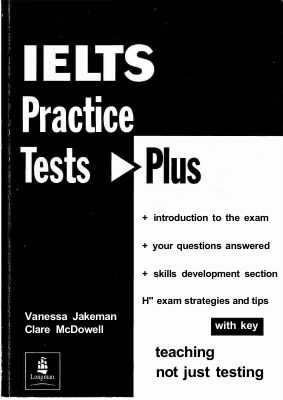
Vanessa Jakeman Clare McDowell
Longman
+ introduction to the exam
+ your questions answered
+ skills development section
H" exam strategies and tips
with key
teaching
not just testing
IELTS Top 20 Questions
1 What level of English do I need to take IELTS?
>• IELTS can provide a test result for all candidates from
beginner to very advanced. Remember, however, that the examination is pitched at intermediate level and above.
2 How often can I sit IELTS?
>• There is no limit to the number of times you may sit IELTS.
However, you are not permitted to re-sit the IELTS test within three months at the centre where you last took it, or at any other centre in the world.
3 How often is IELTS available?
>• There are no set dates for IELTS. Most test centres offer the
test at least once a month and busy centres may conduct more sessions at peak times of the year.
4 Where is IELTS available?
>• There are over 250 approved test centres in over 105
different countries. Contact UCLES, the British Council or IDP Education Australia for an up-to-date list of centres. The IELTS Handbook can answer more of your questions.
5 Do I receive a certificate?
>• No. You will receive a Test Report Form (TRF) from the centre
where you sat the test showing your band score in each part of the test.
6 How long is a test score valid?
>• As with all language proficiency tests, a result has a
maximum 'shelf life' of approximately two years. To be valid after two years, an IELTS TRF should be accompanied by evidence that you have maintained your level of English through study or effective use of the language.
7 What score do I need to get into university?
>• This depends upon the institution to which you are applying.
While some will accept you at Band 5, most universities require a minimum score of 6.5 overall with a minimum score of 6 in each sub-test. Some courses with a heavy emphasis on language may ask for a higher score. You should seek advice from the Faculty or University to which you are applying.
8 Do I need to pass each paper to pass IELTS?
>• There is no actual 'pass mark' for IELTS. You will receive a
TRF which shows your performance on the 9 band scale in each of the four modules. These four scores are then combined to produce your overall band score. There are no
IELTS certificates - just this form.
9 How long does it take to get an IELTS result?
>• You will receive your result within two weeks of sitting the
test. The result will come from the centre where you sat the test.
10 rf I reach a satisfactory level in one part of the test but
not in other parts, do I have to sit the whole test again?
>• "fe "ix; ,*ave to sii all four Modules each time you sit IELTS.
•:.•;:: "f :* J carts of the test will be recorded on each TRF.
11 How long does it take to go from one Band level to
the next?
X This depends on your personal circumstances - your
motivation to learn, your exposure to English and the amount of time you spend studying. Studies show that it can take 200 hours of study to improve by one IELTS band.
12 Do I have to study at an English language school
before I take IELTS?
>• No. However, it is important to be familiar with the types of
questions you will meet in the test. Spending time in an IELTS preparation class with other students will certainly be helpful because IELTS differs from other English examinations.
13 Do I have to sit all parts of the test on the same day?
>• The Listening, Reading and Writing modules are taken on the
same day. The Speaking test is usually on this day but may be held up to two days later - at the discretion of the centre.
14 Is IELTS available on computer?
>• A computerised version of IELTS - known as CBIELTS - will
be available at some centres for the Listening and Reading tests. You can choose whether to take the Writing test on screen or on paper. However, you will always be able to take the pen and paper version of the test at all centres.
15 What age …
Trên đây là phần đầu tài liệu — bấm Đọc sách để xem đầy đủ.










