
Luyện thi IELTS - Vocabulary set 35 Public transport
Xem trước nội dung
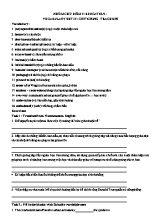
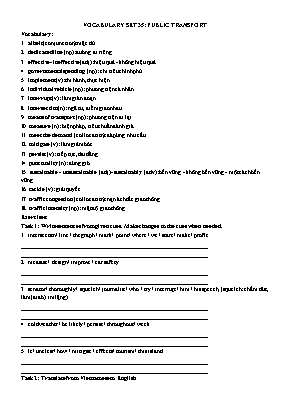
VOCABULARY SET 35: PUBLIC TRANSPORT
Vocabulary:
1. albeit (conjunction): mặc dù
2. dedicated line (np): đường đi riêng
3. effective - ineffective (adj): hiệu quả - không hiệu quả
4. governmental spending (np): chi tiêu chính phủ
5. implement (v): thi hành, thực hiện
6. individual vehicle (np): phương tiện cá nhân
7. interrupt (v): làm gián đoạn
8. intersection (n): ngã tư, điểm giao nhau
9. means of transport (np): phương tiện đi lại
10. measure (n): biện pháp, tiêu chuẩn đánh giá
11. meet the demand (collocation): đáp ứng nhu cầu
12. mitigate (v): làm giảm bớt
13. persist (v): tiếp tục, dai dẳng
14. punctuality (n): đúng giờ
15. sustainable - unsustainable (adj) - sustainably (adv): bền vững - không bền vững - một cách bền vững
16. tackle (v): giải quyết
17. traffic congestion (collocation): nạn ách tắc giao thông
18. traffic intensity (np): mật độ giao thông
Exercises:
Task 1: Write sentences from given cues. Make changes to the cues when needed.
1. intersection / line / the graph / mark / point / where / we / start / make / profit.
2. measure / design / improve / car safety.
3. senator / thoroughly / squelch / journalist / who / try / interrupt / him / his speech, (squelch: chấm dứt, làm (ai đó) im lặng)
4. cold weather / be likely / persist / throughout / week.
5. It / unclear / how / mitigate / effects / tourism / this island.
Task 2: Translate from Vietnamese to English
DeThi.edu.vn
1. Anh ấy đã cố gắng, dù không thành công.
2. Số lượng album bán ra không phải lúc nào cũng là tiêu chuẩn đánh giá sự thành công của một ca sỹ.
3. Khác với tàu hỏa, tàu điện không có đường riêng mà chung đường với các phương tiện đi lại khác như ô tô, xe máy, xe đạp.
4. Sự gia tăng các phương tiện cá nhân càng làm nạn ách tắc giao thông trầm trọng thêm.
5. Để đáp ứng nhu cầu đi lại của người dân và giải quyết nạn ách tắc giao thông, chi tiêu của chính phủ cẩn được đầu tư vào việc nâng cấp hệ thống giao thông công cộng.
Task 3: Fill in the blanks with suitable words/phrases
albeit (conjunction) measure (n)
dedicated line (np) meet the demand (collocation)
effective - ineffective mitigate (v)
governmental spending persist (v)
implement (v) punctuality (n)
individual vehicle sustainable - unsustainable (adj) - sustainably (adv)
interrupt (v) tackle (v)
intersection (n) traffic congestion (collocation)
means of transport (np) traffic intensity (np)
Some people believe the government should spend money on building train and subway lines to reduce traffic congestion. Others think that building more and wider roads is the better way to reduce traffic congestion. Discuss both views and give your opinion.
The methods of 1 traffic congestion have become a heated topic of controversy. Some people argue that the construction of larger roads is the answer to the problem. However, I contend that such a solution is 2 in the long term, while the option to construct railways and subways is a far better 3 .
There is a common fallacy that 4 on building larger roads could 5 address the problem of traffic congestion. An increase in road size could reduce the 6 in the short term, but larger roads also mean that citizens are encouraged to purchase more 7 . This leads to the fact that the roads, 8 larger, would soon be filled with intense traffic again. For instance, traffic jams returned to Shanghai's main streets not long after they were expanded in the early
DeThi.edu.vn
Trên đây là phần đầu tài liệu — bấm Đọc sách để xem đầy đủ.