
Luyện thi IELTS - Vocabulary set 34 Bicycles
Xem trước nội dung
NHÓM CHỦ ĐIỂM 9: TRANSPORT
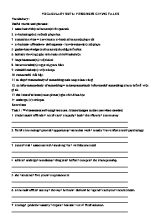
VOCABULARY SET 34: BICYCLES
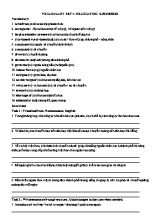
Vocabulary:
1. adopt (v): áp dụng
2. allocate (v): phân bố, chỉ định
3. commute (v): di chuyển, đi lại đều đặn (ví dụ: việc đi làm hằng ngày)
4. convince (v): thuyết phục - convincing (adj): có sức thuyết phục
5. dedicated (adj): dành riêng cho, tận tụy
6. hesitate (v): do dự, ngần ngại
7. impose a (heavy) tax on (collocation): đánh thuế (nặng) vào mặt hàng gì
8. overreliance (n): quá phụ thuộc
9. overdependence (n): quá dựa dẫm, quá phụ thuộc
10. prevalent (adj): phổ biến
11. prominent (adj): nổi bật
12. promote (v): khuyến khích, đẩy mạnh, xúc tiến
13. shortage (n): thiếu hụt
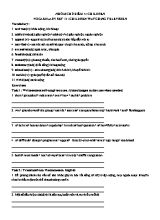
Exercises:
Task 1: Write sentences from given cues. Make changes to the cues when needed.
1. government / programme / grow / cash crops / export / be / double-edged sword / since / it / create / local food shortage.
2. he / move / house / three time / just / find / convenient location / commute / work.
3. agriculture / company / fail / convince / consumers / that / GM (genetically modified) foods / safe.
4. recruiter / surprised / see / him / hesitate / accept / job offer.
5. overdependence / use / pain killers / lead / drug addict.
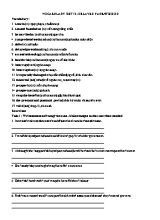
Task 2: Translate from Vietnamese to English
1. Nhờ sự phát triển của các hãng hàng không giá rẻ, việc đi du lịch nước ngoài trở nên phổ biến hơn, đặc biệt với các bạn trẻ.
DeThi.edu.vn
2. Thuốc lá bị đánh thuế rất nặng, tuy nhiên, điều này có vẻ không hiệu quả trong việc giảm thiểu số người hút thuốc.
3. Chính phủ nên đóng vai trò nổi bật hơn trong việc khuyến khích và bảo vệ nhân quyền.
4. Vé cho buổi hòa nhạc sẽ hạn chế số lượng và chỉ được phát cho những ai đăng kí sớm.
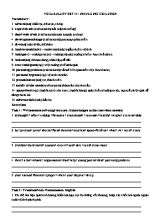
5. Vì nghiên cứu của chúng tôi tới thời điểm hiện tại chưa trả lời được câu hỏi nào cho vấn đề nghiên cứu đề ra trước đó, chúng tôi cần áp dụng một cách tiếp cận khác.
Task 3: Fill in the blanks with suitable words/phrases
adopt (v) impose a (heavy) tax on (collocation)
allocate (v) overreliance (n) - overdependence (n)
commute (v) prevalent (adj)
convince (v) - convincing (adj) prominent (adj)
dedicated (adj) promote (v)
hesitate (v) shortage (n)
Nowadays people use bicycles less as a form of transport. Why is that? What can we do to encourage people to use bicycles more?
Cycling has long been considered an effective way of improving physical health and reducing the risk of obesity. However, in recent decades, there has been a 1 trend for people to use bicycles less to 2 . This trend could be ascribed to a few reasons, and definite actions must be taken to 3 the use of bicycles.
There are obvious reasons as to why people 4 to choose bicycles as a form of transport. The most 5 reason is the 6 on modern means of transport, such as cars and motorbikes. These modes of transport are faster and more suitable for long journeys than bicycles. Another 7 reason is that in many places in the world, including Vietnam, there are no 8 cycling paths for bicycles. This means that cyclists in these regions would have to ride in the same lane as motor vehicles, which is without doubt a dangerous practice.
To boost the use of bicycles, the government should 9 both of the following measures. First, the government should 10 motor vehicles. This tax would discourage people from using motor vehicles, and thus encourage them to switch to bicycles, a human-powered land vehicle. Second, the government should 11 more money to the construction of cycling paths for citizens. If a system of cycling paths was well-developed, people would consider bicycles a safe and convenient mode of transport.
DeThi.edu.vn
Trên đây là phần đầu tài liệu — bấm Đọc sách để xem đầy đủ.