.jpg)

Luyện thi IELTS - Vocabulary set 21 Natural resources (Phần 1)
Xem trước nội dung
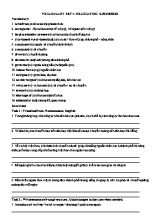
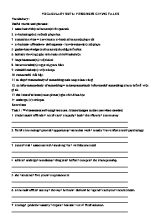
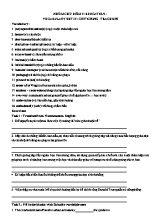
VOCABULARY SET 21: NATURAL RESOURCES (P.1)
Vocabulary:
1. alternative (adj/n): thay thế
2. consume (v) - consumption (n): tiêu thụ, sử dụng
3. demand for (collocation): nhu cầu đối với cái gì
4. efficient (adj) - efficiency (n): hiệu quả, năng suất
5. exploit (v) - exploitation (n): khai thác
6. fossil fuels (n): nhiên liệu hóa thạch (bao gồm than, bùn, dầu thô và khí tự nhiên)
7. generate (v): tạo ra, phát ra, sản sinh
8. hybrid (adj): lai tạp
9. hybrid car (np): xe lai điện
10. lower (v): làm giảm đi
11. thermal power station (np): nhà máy nhiệt điện
12. tremendous (adj): khổng lồ, dữ dội, lớn lao
13. vast (adj): to lớn, mênh mông
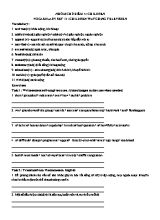
Exercises:
Task 1: Write sentences from given cues. Make changes to the cues when needed.
1. high vehicle / must / take / alternative / route / because / low clearance / under / bridge.
2. propose / tidal barrage / would / generate / enough / electric / supply / between 60,0001 80,000 home.
3. jet / high fuel consumption / make / expensive / operate.
4. fair trade / measure / essential / stop / exploitation / small / third-world coffee farmer.
5. heart surgery / exact / tremendous / skill / concentration.
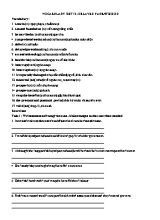
Task 2: Translate from Vietnamese to English
1. Nhiên liệu hóa thạch là dạng nhiên liệu được hình thành từ quá trình tự nhiên, bao gồm than đá, dầu thô, khí tự nhiên.
2. Sử dụng xe lai điện giúp bảo vệ môi trường vì xe lai điện sử dụng ít xăng hơn nên thải ra ít khí thải gây hiệu ứng nhà kính hơn.
DeThi.edu.vn
3. Lãi suất tiết kiệm lại bị giảm một lần nữa, đây là lần thứ 3 trong năm nay.
4. Chính phủ khó có khả năng đồng ý với yêu cầu độc lập của những kẻ nổi loạn.
5. Những phát hiện y học gần đây đã dẫn lối đến những loại vắc-xin hiệu quả hơn.
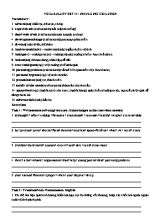
Task 3: Fill in the blanks with suitable words/phrases
The world natural resources are consumed at an ever-increased rate. What are the causes of this situation?
What are the solutions?
The overconsumption of natural resources is emerging as a major topic of concern today. This alarming trend is caused by a few factors, and it should be addressed by a number of definite actions.
The increasingly high level of 1 of natural resources could be ascribed to a number of causes. The most obvious reason is the 2 resources in developing countries, such as China and Brazil. The citizens of these countries are becoming increasingly wealthy, and they may now afford a living standard that is associated with a higher level of resource 3 . A clear example of this is the widespread use of cars among tens of millions of middle-income Chinese nationals, which may have contributed substantially to the burning of oil on a global scale. Besides, the over-dependence on natural resources, such as 4 , is another significant reason to consider. In Vietnam, for example, the
majority of electricity is 5 in 6 power stations, in which a 7 amount of coal is the burnt on a daily basis.
Some measures can be taken to mitigate the problem of over-8 Earth's resources. The most practical measure at the moment is to reduce the demand for resources in developing countries.This can be done by mass-producing 9 products, such as 10 cars, and selling these items at a low price to citizens of these nations. If such a measure is implemented, these people may still benefit from better living standards without over-consuming natural resources. Besides, a more sustainable solution is to 11 the reliance on natural resources by taking advantage of 12 sources. For instance, wind and tidal power in the Netherlands, nuclear power in Japan and solar power in the United States have all proven their 13 in energy production. These
alternative (adj/n) hybrid car (np)
consume (v) - consumption (n) lower (v)
demand for (collocation) thermal power station (np)
efficient (adj) - efficiency (n) tremendous (adj)
exploit (v) - exploitation (n) vast (adj)
fossil fuels (n) hybrid (adj)
generate (v)
DeThi.edu.vn
Trên đây là phần đầu tài liệu — bấm Đọc sách để xem đầy đủ.