- Tham Tam Vy.jpg)

Xem trước nội dung
Thẩm Tâm Vy, July 17th, 2019 GRAMMAR FOR ADVANCED LEARNERS 10
GRAMMAR FOR ADVANCED LEARNERS 10
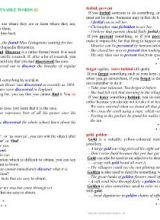
MODAL VERBS (2) MUST, SHOULD, OUGHT TO, HAVE TO, NEED TO English has a number of different ways of expressing the concepts of obligation and necessity, prohibition, recommendation and logical deduction. Let’s look at the different modal verbs, as well as some common non-modal verbs and phrases, which we use to express these concepts.
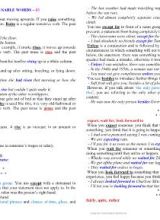
OBLIGATION AND NECESSITY A. Forms. must - have (got) to - need to – should / ought to * present: must - has / have (got) to – need / needs to – should / ought to * past: had to - had (got) to - needed to – should / ought to have (done) * future: must - will have to - will need to - should / ought to Must, should and ought to are modal verbs (unlike need to and have to). They do not change form in the present tense, nor do they have a past tense or a future form with will, nor infinitive or participle forms. As an alternative to must or when we can't use must (e.g. to refer to the past), we usually use have to: * Past: The staff and students at the university had to evacuate the campus. * Future: The Council must l will have to find ways of cutting costs next year. * Infinitive: It's difficult to have to stand by and watch your child in pain. * Participle: Having to listen to hip-hop music all evening is my idea of torture! We can express a past meaning of should and ought to by using a modal perfect: - They really should / ought to have consulted their shareholders first. Need can be used as a modal verb (without to), usually in negatives and questions: - Need you shout so? I'm right next to you! - We needn't bother making the bed. The maid will do it. As an alternative to need, we can use need to or have to: - Do you need to / have to shout so? - We don't need to / have to bother making the bed. We can use nust, have to and need to with a passive phrase: - Democracy must / has to be seen to work. - Pulses need to be cooked thoroughly to eradicate the toxins in them. B. Obligation. We usually express obligation in English with must or have to: - You must arrive in good time for the meeting tomorrow. The MD will be there. - Everyone has to register their name and address in order to be able to vote. The difference in meaning between have to and must can be fine and often depends on whether or not the speaker sees the obligation as one they are imposing. We use have to to express an obligation we see as outside our control, e.g. rules imposed by an authority: - Students have to wear school uniforms in the sixth form. We often use must to express an obligation imposed by the speaker: - I must get up earlier - I waste so much time in the mornings. Must is commonly used for the following situations:
* To give a strong personal opinion: I believe people must vote at elections. * To impose an obligation on oneself: I really must lose some weight. * To give instructions: The electricity must always be switched off before repairs are attempted. (In giving instructions, must is often used with a passive verb.) However, musf expresses a strong obligation and we do not often use it in face-to- face conversation as it can seem impolite and often inappropriate. We often use should and ought to as an alternative to must as they express a subjective (often moral) obligation felt by the speaker, but the obligation is weaker than with must: - You should treat your neighbours with more respect. It is possible to use need to to express external obligation, particularly in the future: - We'll need to get our visas sorted out or we won't be able to stop over in the States. We use have got to for external obligation like have to, but it is more informal than have to and more common in speech than in writing (have got to is rare in US English): - What time have we got to be at the airport tomorrow? [Claim forms have got to be date-stamped before payment will be made.] - Claim forms have to be date-stamped before payment …
Trên đây là phần đầu tài liệu — bấm Đọc sách để xem đầy đủ.