
Xem trước nội dung
TQT BÀI KIỂM TRA
GRAMMAR FOR ADVANCED LEARNERS 9
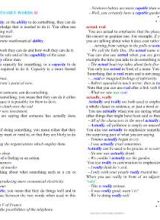
MODAL VERBS CAN, COULD, MAY , MIGHT, BE ABLE TO A. Modal verbs can be confusing for learners because individual modal forms can be used to express a number of different meanings. We use these modals to describe ability and possibility, to make deductions, arrangements, suggestions and offers, and to ask for and give permission. (For the use of can and could with sense verbs; for the use of modal verbs in conditional sentences). We use can to describe an ability and cannot or can't to describe a lack of ability in the present: - She can speak Spanish but she can't speak ltalian. If the present ability is surprising or involves overcoming some difficulty, we can also use is/are able to: - Despite his handicap he is able to drive a car. We cannot usually use be able to with a passive: - This book is able to be used by complete beginners. => This book can be used by complete beginners. To emphasise the difficulty or to suggest a great effort (in the present, past or future) we use manage to. In more formal English we can also use succeed in + -ing form: - Do you think she'll manage to get a visa? - The army succeeded in defeating their enemy. To describe a future ability we use will be able to, not can - Can I speak fluently-b y the end of the course? => Will I be able to speak fluently by the end of the course? We also use be able to where can / could is grammatically impossible, for example: - I haven't been able to drive since I dislocated my wrist. (with the perfect aspect) - We love being able to talk the local language. (with -ing forms and infinitives) Another form for not be able to is be unable to. It is more common in formal English: - The lawyer was unable to persuade the jury of her client's innocence. We use can (present) and could (past) before sense verbs. - I think I can smell something burning in the kitchen. B. We use could to describe the possession of an ability in the past: - Mozart could play the piano at the age of five. To describe the successful use of an ability on a specific occasion we do not use could, we use a past tense or was / were able to: - Mike’s car broke down but fortunately he could repair it. => Mike's car broke down but fortunately he was able to repair it. But we can use could in questions, and in sentences with limiting adverbs such as only or hardly: - 'Could you fix the computer yourself?' 'No, I could only back up the key files.' - She was so exhausted she could hardly speak. We use couldn't or was/were not ableto to describe a lack of ability or success:
- Mozart couldn't speak French. - Despite being a mechanic, Mike couldn't fix his car when it broke down yesterday. We use could / might have + past participle to describe a past ability which wasn't used or a past opportunity which wasn't taken. The meaning is similar to 'would have been able to' (compare the use of these forms in the third conditional). - She could have paid by credit card but she preferred to use cash. (= She had the ability to pay by credit card but she didn't use it.) - I might have gone to university after leaving school but I chose to get a job instead. (= I had the opportunity to go, but I didn't take it.) We often use these forms to make a criticism: - You might /could have told me about the party! (= You had the chance to tell me but you didn't.) We can use couldn't have + past participle + comparative adjective when we want to emphasise a past action or feeling: - They couldn't have tried harder to make me feel welcome. (= They tried very hard.) - I couldn't have been more pleased when I heard about your results – congratulations! (= I was very pleased.)
POSSIBILITY, DEDUCTTON AND SPECULATTON A. We use can to describe things which are generally possible (we know they sometimes happen): - Drinks in restaurants can be very expensive. (= Drinks are sometimes expensive.) In scientific and academic English we use may in the same way: - Over-prescribing of …
Trên đây là phần đầu tài liệu — bấm Đọc sách để xem đầy đủ.