
Xem trước nội dung
NGUYEN VAN HA – TRUC THAI SECONDARY SCHOOL
Gerund-To inf-Bare inf
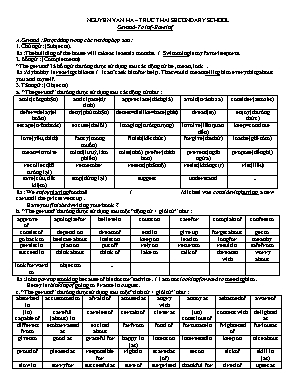
A.Gerund :Được dùng trong các trường hợp sau : 1.Chủ ngử: (Subjects). Ex:The building of the house will take at least six months. / Swimming is my favorite sports. 2.Bổ ngử : (Complements). “The gerund” là bổ ngử thường được sử dụng sau các động từ be ,mean,look…. Ex:My hobby is rearing chikens / I can’t ask him for help .That would mean telling him everything about you and myself . 3.Tân ngữ: (Objects). a. “The gerund” thường được sử dụng sau các động từ như :
amit(công nhận) anticipate(dự tính)
appreciate(đánh giá) avoid (tránh xa) consider(xem xét)
defer=delay(trì hoãn)
deny(phủ mhận) detest=dislike=hate(ghét) dread(sợ) enjoy(thưởng thức) escape(trốn thoát) excuse(tha lỗi) imaging(tưởng tượng) involve(liên quan đến)
keep=continue
love(yêu,thích) fancy(mong muốn)
finish(kết thúc) forgive(tha thứ) loathe(ghê tởm)
mean=involve mind(lưu ý,làm phiền)
miss(nhớ) prefer(thích hơn)
prevent(ngăn ngừa)
propose(đề nghị)
recollect(hồi tưởng lại)
remember resent(phẫn nộ) resist(kháng cự) rist(liều)
save(cứu ,tiết kiệm)
stop(dừng lại) suggest understand …..
Ex: We enjoy playing football / Micheal was considering buying a new car until the prices went up . Have you finished writing your book ? b. “The gerund” thường được sử dụng sau một “động từ + giới từ” như :
Ex:John gave up smoking because of his doctor’s advice . / I am not looking forward to meeting him . Henry is thinking of going to France in August . c. “The gerund” thường được sử dụng sau một “tính từ + giới từ” như : absorbed in
accustomed to afraid of amused at angry with
annoy at ashamed of aware of
(in) capable of
carefull (about) in
careless of certain of clever at (un) conscious of
content with delighted at different from
embarrassed at
excited about
far from fond of fortunate in frightened of
furious at
given to good at grateful for happy in (at)
intent on interested in keep on nice about
proud of pleased at responsible for
right in scared at (of)
set on sick of skill in (at) slow in sorry for successful at sure of surprised thankful for tired of upset at
approve of
apologize for believe in count on care for complain of confess to
consist of depend on dream of end in give up forget about get to go back to hesitate about insist on keep on lead to long for mean by persist in plan on put off rely on return to result in safe from succeed in think about think of lake to talk of threaten with
worry about look forward to
object to …..
ThuVienDeThi.com
NGUYEN VAN HA – TRUC THAI SECONDARY SCHOOL
(in) at (from) worried about
wrong in …….
Ex: Alice is fond of dancing ./He is interested in seeing this film ./We are accustomed to sleeping late on weekends . d. “The gerund” thường được sử dụng sau thành ngữ (expesions): can’t stand=can’t be (không thể chịu đựng)
can’t help (không thể không ..) can’t face (không thể đương đầu) feel like (yêu thích) it’s no use/good (chẳng ích gì) to have difficult to be worth (đáng) to be busy a waste of spend time/fun/trouble (vui vẻ,lo lắng)
………..
Ex: I didn’t feel like talking to him after what had happened . / It’s no use reading this kind of book . It’s worth remembering that he has once been a boxer . e. “The gerund” thường được sử dụng sau một số tính từ khác như : amusing comfortable difficult easy great hopeless lovely nice pleasant strange useless wonderful Ex:It was difficult getting him to do it . / It was useless arging with Jane .
* Trường hợp này thường được dùng trong văn nói hơn là văn viết . f. “The gerund” thường được sử dụng sau một “danh từ + giới từ” như :
choice of excuse for possibility of
intention of reason for menthod for ………
Ex: There is no reason for leaving this early ./George has no excuse for chopping out of school . 4. Bổ ngữ của tân ngữ : (objective complements): “The gerund” thường được sử dụng sau một số động từ như : call catch discover feel find heard get imagine keep leave notice see send set stop …
Trên đây là phần đầu tài liệu — bấm Đọc sách để xem đầy đủ.