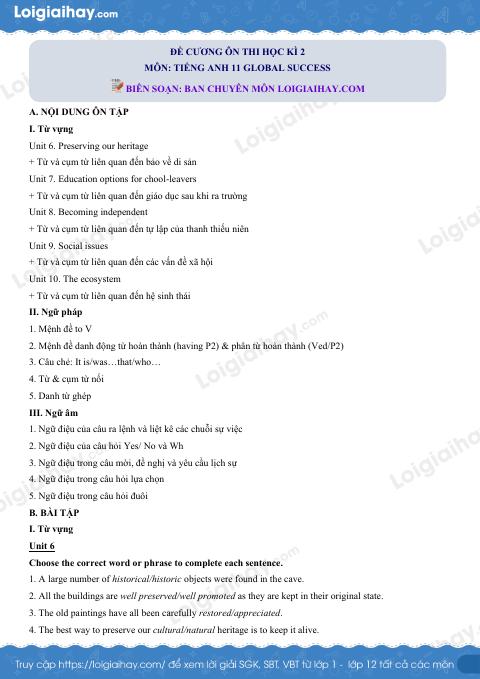

Đề cương ôn tập HK2 tiếng Anh 11 global success có đáp án
Xem trước nội dung
A. NỘI DUNG ÔN TẬP
I. Từ vựng
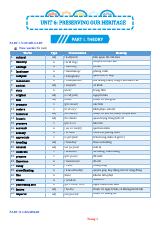
Unit 6. Preserving our heritage
+ Từ và cụm từ liên quan đến bảo về di sản
Unit 7. Education options for chool-leavers
+ Từ và cụm từ liên quan đến giáo dục sau khi ra trường
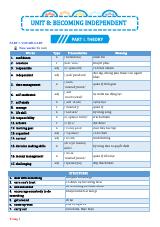
Unit 8. Becoming independent
+ Từ và cụm từ liên quan đến tự lập của thanh thiếu niên
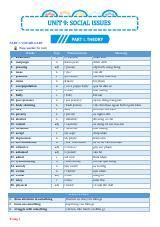
Unit 9. Social issues
+ Từ và cụm từ liên quan đến các vấn đề xã hội
Unit 10. The ecosystem
+ Từ và cụm từ liên quan đến hệ sinh thái
II. Ngữ pháp
1. Mệnh đề to V
2. Mệnh đề danh động từ hoàn thành (having P2) & phân từ hoàn thành (Ved/P2)
3. Câu chẻ: It is/was…that/who…
4. Từ & cụm từ nối
5. Danh từ ghép
III. Ngữ âm
1. Ngữ điệu của câu ra lệnh và liệt kê các chuỗi sự việc
2. Ngữ điệu của câu hỏi Yes/ No và Wh
3. Ngữ điệu trong câu mời, đề nghị và yêu cầu lịch sự
4. Ngữ điệu trong câu hỏi lựa chọn
5. Ngữ điệu trong câu hỏi đuôi
B. BÀI TẬP
I. Từ vựng
Unit 6
Choose the correct word or phrase to complete each sentence.
1. A large number of historical/historic objects were found in the cave.
2. All the buildings are well preserved/well promoted as they are kept in their original state.
3. The old paintings have all been carefully restored/appreciated.
4. The best way to preserve our cultural/natural heritage is to keep it alive.
ĐỀ CƯƠNG ÔN THI HỌC KÌ 2
MÔN: TIẾNG ANH 11 GLOBAL SUCCESS
BIÊN SOẠN: BAN CHUYÊN MÔN LOIGIAIHAY.COM
5. We used social media to propose/promote the festival to a wider audience.
6. The temple was badly damaged/restored in the earthquake.
7. The exhibition will help students appreciate/hold local culture.
8. Taking a boat trip is a good way to enjoy the beautiful landscape/history of the area.
Đáp án:
1. historical 2. well preserved 3. restored 4. cultural
5. promote 6. damaged 7. appreciate 8. landscape
Unit 7
Choose the best answers to complete the sentences.
1. __________ education is a popular option for school-leavers who don’t go to university.
A. Vocational
B. Academic
C. Secondary
D. Formal
2. After completing their vocational courses, students are offered four-month __________ to learn from
skilled people in the trade.
A. education
B. apprenticeships
C. courses
D. breaks
3. The University of Oxford is one of the best academic __________ in the world.
A. chances
B. careers
C. institutions
D. companies
4. __________ gives students the opportunity to study a subject in depth.
A. Secondary education
B. Vocational education
C. Special education
D. Higher education
5. My brother wasn’t offered the job because he didn’t have the right __________.
A. qualifications
B. trades
C. apprentices
D. skilled people
6. He completed a __________ cooking course at this vocational school before he became a restaurant cook.
A. business
B. professional
C. formal
D. responsible
7. At the education fair, we collected a lot of __________ from different institutions about their training
programmes.
A. answers
B. questions
C. brochures
D. donations
8. Despite their financial difficulties, my parents __________ to pay for my university education.
A. disagreed
B. approved
C. refused
D. managed
Đáp án:
1. A 2. B 3. C 4. D
5. A 6. B 7. C 8. D
Unit 8
Complete the sentences using the correct forms of the words and phrases in the box.
confidence responsibility trust life skill get into the habit
come up with study plan independent
1. Even as a child, Nga was very __________. She always preferred to do things by herself.
2. She knows how to set her own learning goals and create good __________ to achieve them.
3. Children can earn their parents’ __________ by being honest with them.
4. Learners can boost their _________ by completing tasks and solving problems on their own.
5. After a long discussion, we __________ some amazing ideas for our school party.
6. It is important not to __________ of staying up late.
7. My sister takes her __________ as a primary teacher very seriously.
8. Getting around by yourself using public transport, walking, or …
Trên đây là phần đầu tài liệu — bấm Đọc sách để xem đầy đủ.