
Xem trước nội dung
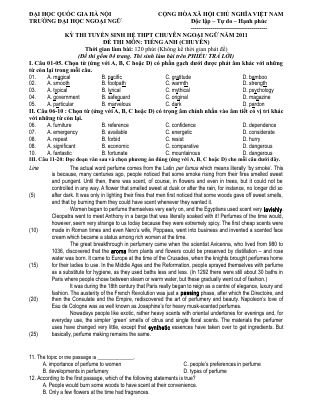
ĐẠI HỌC QUỐC GIA HÀ NỘI CỘNG HÒA XÃ HỘI CHỦ NGHĨA VIỆT NAM TRƯỜNG ĐẠI HỌC NGOẠI NGỮ Độc lập – Tự do – Hạnh phúc -------------------------------------- KỲ THI TUYỂN SINH HỆ THPT CHUYÊN NGOẠI NGỮ NĂM 2011
ĐỀ THI MÔN: TIẾNG ANH (CHUYÊN) Thời gian làm bài: 120 phút (Không kể thời gian phát đề) (Đề thi gồm 04 trang. Thí sinh làm bài trên PHIẾU TRẢ LỜI) I. Câu 01-05. Chọn từ (ứng với A, B, C hoặc D) có phần gạch dưới được phát âm khác với những từ còn lại trong mỗi câu. 01. A. magical B. pacific C. gratitude D. bamboo 02. A. smooth B. footpath C. warmth D. strength 03. A. typical B. lyrical C. mythical D. psychology 04. A. government B. safeguard C. original D. magazine 05. A. particular B. marvelous C. dark D. pardon II. Câu 06-10 : Chọn từ (ứng với A, B, C hoặc D) có trọng âm chính nhấn vào âm tiết có vị trí khác với những từ còn lại. 06. A. furniture B. reference C. confidence D. dependence 07. A. emergency B. available C. energetic D. considerate 08. A. repeat B. forbid C. resist D. hurry 08. A. significant B. economic C. comparative D. dangerous 10. A. fantastic B. fortunate C. mountainous D. dangerous III. Câu 11-20: Đọc đoạn văn sau và chọn phương án đúng (ứng với A, B, C hoặc D) cho mỗi câu dưới đây.
11. The topic of the passage is _____________.
A. importance of perfume to women C. people’s preferences in perfume B. developments in perfumery D. types of perfume 12. According to the first passage, which of the following statements is true?
A. People would burn some woods to have scent at their convenience. B. Only a few flowers at the time had fragrances.
The actual word perfume comes from the Latin per fumus which means literally ‘by smoke’. This is because, many centuries ago, people noticed that some smoke rising from their fires smelled sweet and pungent. Until then, there was scent, of course, in flowers and even in trees, but it could not be controlled in any way. A flower that smelled sweet at dusk or after the rain, for instance, no longer did so after dark. It was only in lighting their fires that men first noticed that some woods gave off sweet smells, and that by burning them they could have scent whenever they wanted it.
Women began to perfume themselves very early on, and the Egyptians used scent very lavishly. Cleopatra went to meet Anthony in a barge that was literally soaked with it! Perfumes of the time would, however, seem very strange to us today because they were extremely spicy. The first cheap scents were made in Roman times and even Nero’s wife, Poppaea, went into business and invented a scented face cream which became a status among rich women at the time.
The great breakthrough in perfumery came when the scientist Avicenna, who lived from 980 to 1036, discovered that the aroma from plants and flowers could be preserved by distillation – and rose water was born. It came to Europe at the time of the Crusades, when the knights brought perfumes home for their ladies to use. In the Middle Ages and the Reformation, people sprayed themselves with perfume as a substitute for hygiene, as they used baths less and less. (In 1292 there were still about 30 baths in Paris where people chose between steam or warm water, but these gradually went out of fashion.)
It was during the 18th century that Paris really began to reign as a centre of elegance, luxury and fashion. The austerity of the French Revolution was just a passing phase, after which the Directoire, and then the Consulate and the Empire, rediscovered the art of perfumery and beauty. Napoleon’s love of Eau de Cologne was as well known as Josephine’s for heavy musk-scented perfumes.
Nowadays people like exotic, rather heavy scents with oriental undertones for evenings and, for everyday use, the simpler ‘green’ smells of citrus and single floral scents. The materials the perfumer uses have changed very little, except that synthetic essences have taken over to get ingredients. But basically, perfume making remains the …
Trên đây là phần đầu tài liệu — bấm Đọc sách để xem đầy đủ.